NBE3 · Final Performance Task
How Do We Learn to
Live Together?
My learning journey through NBE3
By: Sheraz Khan
Kindness is where my understanding began, not where it ended.
Begin My Journey
What I Used to Think
At the beginning of this course, I thought learning to live together was mostly about being kind, treating everyone equally, and helping people when they needed it.
A Moment That Shaped My Thinking
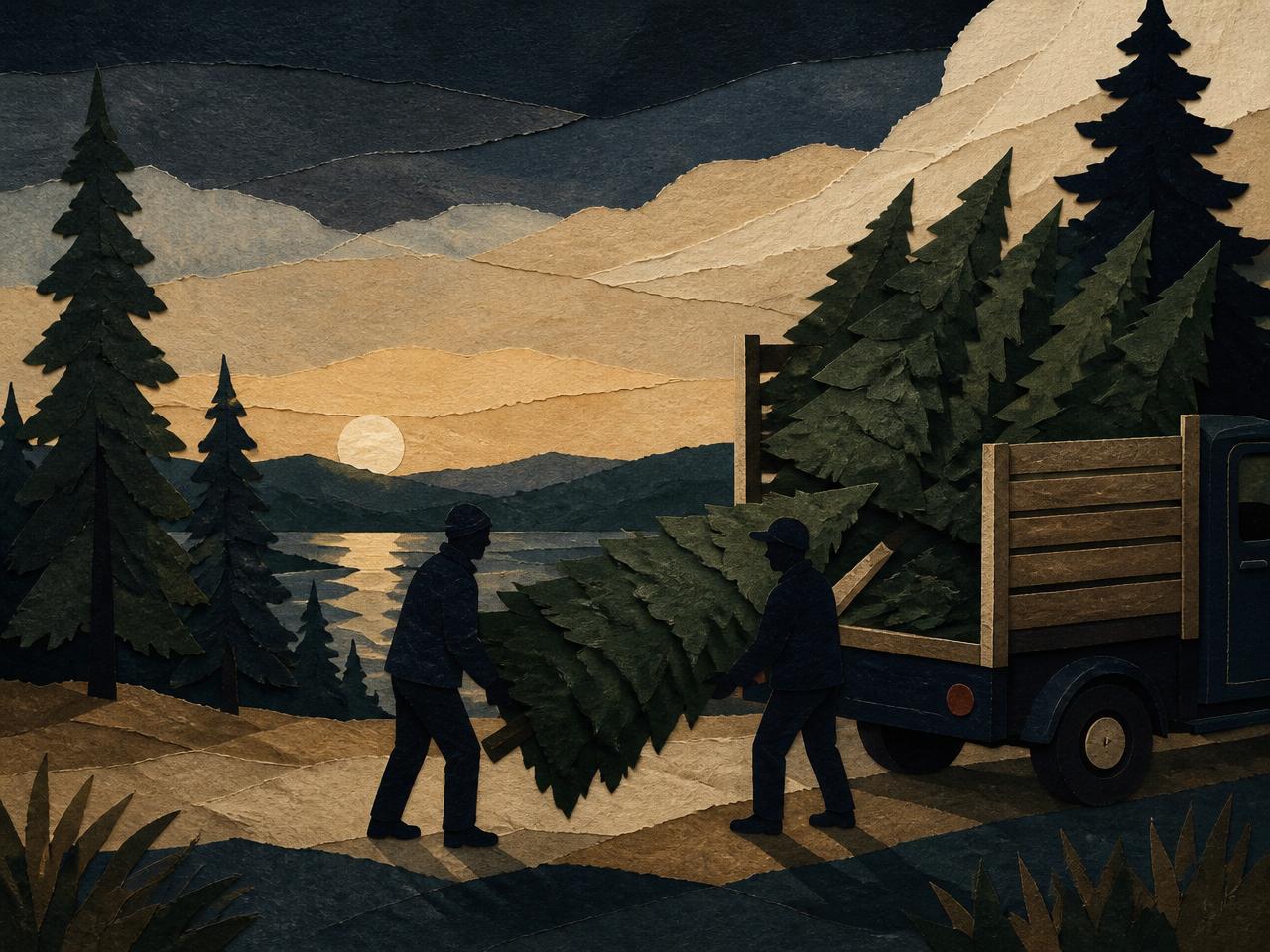
When I was fifteen, I saw an elderly man unloading Christmas trees from his truck outside his shop. I decided to help him. When we finished, he thanked me, and I felt proud that I had noticed someone struggling and made his work a little easier.
My Reflection
That experience taught me that small acts of kindness can make people feel supported.
Was Kindness Enough?
This course did not make me reject my belief in kindness. Instead, it made me question whether kindness alone is enough. At first, that was uncomfortable because treating everyone equally had always sounded obviously fair to me.
Good intentions do not automatically create fairness.
Fairness Is Not Sameness
Through Alootook Ipellie’s poem, I began to understand how a person can feel divided between Inuit and Western cultures. The speaker carries a conflict he did not create. I realized that treating everyone the same can still be unfair when it pressures people to hide part of their identity in order to belong.
My Reflection
Belonging should not require someone to erase part of themselves.

“It is never easy
Walking with an invisible border
Separating my left and right foot.”
When Help Becomes Control
“Utiqtuq” changed how I understood helping. Dr. English claims that he is protecting Aliisa, but he ignores her knowledge, removes her rifle, and continues taking her away after she changes her mind. His idea of help becomes control because Aliisa is not allowed to decide what happens to her.
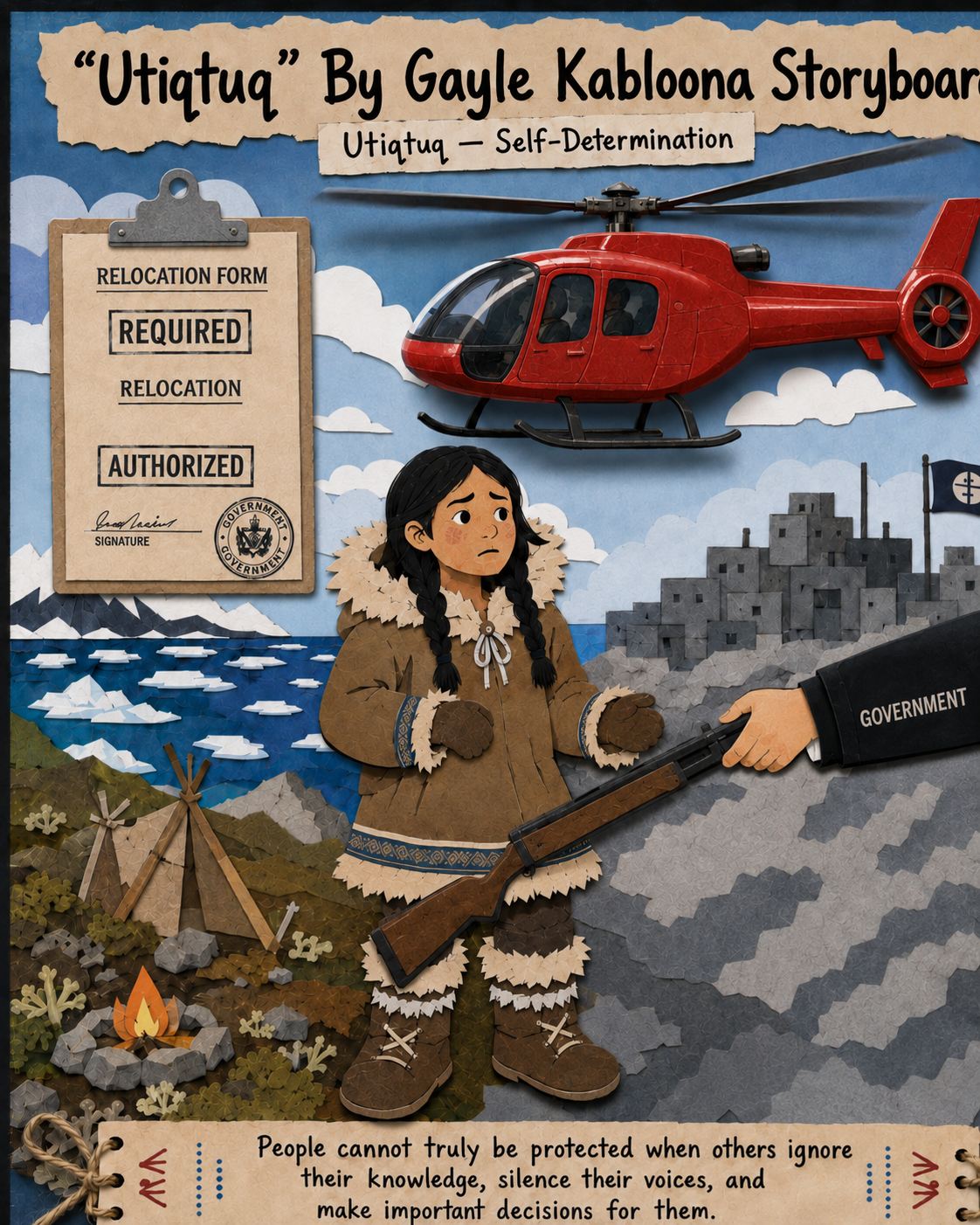
The land
independence and knowledge
The rifle
control over her own safety
The relocation form
government authority
The helicopter
protection becoming control
Connecting back to my memory
This made me reconsider my own experience. The elderly man accepted my help and remained in control of what he needed. I am not comparing my experience to colonial control. Instead, the story helped me recognize a broader principle: help should involve listening to the person receiving it.
My Reflection
Respect means helping with someone, not deciding for them.
(Kabloona).
Living Together Without Disappearing
Amanda Polchies’ account, “The Day I Held a Feather to Power,” and Jeremy Dutcher’s “Honour Song” showed me that resistance can be peaceful, cultural, and powerful. The feather, the prayer, the music, and the Indigenous language demonstrate that living together should not require one culture to disappear so another can dominate.
My Reflection
Living together requires space for cultures to remain alive and distinct.
07 · Where I Am Now
What I Believe Now
Now, I believe we learn to live together by listening before acting, respecting self-determination, acknowledging unequal histories, and making room for people to remain themselves.
01
Listen
before acting
02
Respect
self-determination
03
Acknowledge
unequal histories
04
Act
with, not for, others
Beyond This Course
These lessons apply to friendships, families, schools, workplaces, and communities. Kindness still matters, but real respect means asking, listening, and allowing others to have a voice in decisions that affect them.
Paths meet in a shared space, then continue, still distinct.
08 · My Final Reflection
Kindness brought me into this course. Listening changed what kindness means to me.
We learn to live together when we stop assuming that we already understand others and begin making space to hear them.
View Works CitedMLA · 9th Edition
Works Cited
- Dutcher, Jeremy. “Honour Song.” Wolastoqiyik Lintuwakonawa, Independent, 2018. youtube.com/watch?v=dmYsJ8sKULY.
- Ipellie, Alootook. “Walking Both Sides of an Invisible Border.” An Anthology of Canadian Native Literature in English, edited by Daniel David Moses and Terry Goldie, Oxford UP, 1998.
- Kabloona, Gayle. “Utiqtuq.” Northern Voices: Inuit Writing in English, edited by Penny Petrone, U of Toronto P, 1992.
- Polchies, Amanda. “The Day I Held a Feather to Power: a Personal Account of Resistance to Fracking.” Water Docs, 21 Mar. 2018, waterdocs.ca/water-talk/2018/3/21/ssh1z5g4jttrgsstwvu0ua138uexrn.
- Zabriskie, Chris. “Cylinder Five.” Cylinders, 2014. Creative Commons Attribution 4.0.
NBE3 · Grade 11 · Final Performance Task · By: Sheraz Khan